Unleashing the unheard voices of cycling
Cycling is gaining ground. Cities are integrating it into transport, climate and public health strategies. But access remains uneven. A report from a long-standing partnership with the European Cyclists’ Federation shows
how cities can open cycling to underrepresented groups, including women, children, low-income communities, and people living with chronic conditions. This work is also reflected at Velo-city. More than 20 delegates are attending through the Cities for Better Health Travel Grant, bringing lived experience into the room. Momentum is building. In 2025, the
Healthy Cycling Challenge drew 243 applications worldwide. Three projects from Nepal, Peru and Brazil each secured USD 100,000 to move from idea to action.
Team Novo Nordisk: making possibility visible
If cities can change through cycling, so can lives. Team Novo Nordisk, the world’s first all-diabetes professional cycling team, exists to show exactly that. Its riders race at the highest level while living with diabetes, proving that a chronic condition does not have to narrow what you can do. For people living with diabetes, the team can be the difference between maybe and why not. Through racing, advocacy and community engagement, the team shows how movement supports confidence, ambition and long-term health. In session 8.6 at Velo-city, athlete
Becky Furuta will share what cycling made possible for her. The bike did more than build fitness; it helped her find stability, regain control, and create a way forward out of poverty. Most people will never race professionally. But far more people would cycle every day — with similar benefits for physical health, mental wellbeing, resilience, and social inclusion — if cities made cycling safe, simple, and welcoming.
Driving the urban health agenda
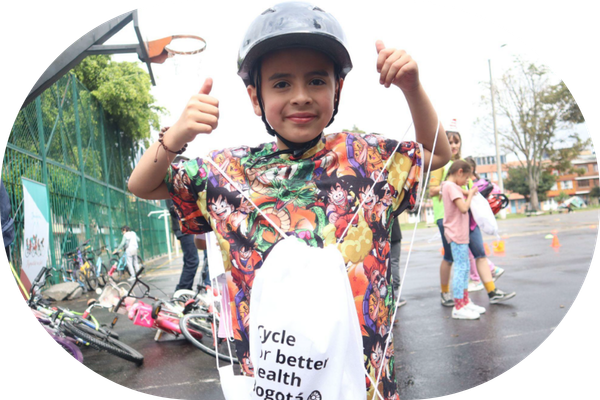
Across Italy, this work is already happening on the ground. Since 2016, Cities for Better Health has partnered with local leaders to put health more firmly on the urban agenda by bringing stakeholders together, piloting solutions and scaling what works. Cities including Milan, Rome, Bologna, Genoa, Turin, Naples and Venice are part of this effort. Initiatives such as Cycle for Better Health in Bari and BiciBus Sauro in Genoa show how cycling can be embedded into daily routines, particularly for children. These may look like small changes, but they add up. When active travel becomes part of childhood, it is more likely to last. Through
a partnership with BYCS, this approach is now extending to cities including Bratislava and Bogotá. Different contexts, shared goal: make cycling an easy, everyday choice.
The road ahead
Cycling has moved from the margins to the mainstream of city planning, closely linked to public health, climate goals and equity. The question now is not whether to invest in cycling, but how quickly cities can deliver at scale. This shift from idea to implementation will be explored during
session 2.1 – Promoting healthy and sustainable neighbourhoods in Peru, Nepal and Brazil (16 June, 12:15–13:15), where Healthy Cycling Challenge projects will share early insights from delivery.
Come and find us at
booth 71. Try the smoothie bikes, say hello and keep the conversation going.